
By the end of a Minnesota summer, even a lawn that looked great in June can start showing signs of stress. Thin grass, hard soil, bare patches, heavy foot traffic, weeds, and areas that struggle to absorb water can all become more noticeable as fall approaches.
That often leads homeowners to ask the same question: Does my lawn need aeration, overseeding, or both?
The answer depends on what is happening above and below the soil.
Aeration and overseeding are two different lawn-care practices, but they complement each other extremely well. Aeration primarily addresses compacted soil and root-zone conditions, while overseeding focuses on adding new grass to thin or bare areas.
For homeowners throughout Brainerd, Baxter, Nisswa, Crosslake, and the surrounding Lakes Area, early fall is an especially important time to evaluate your lawn. Minnesota’s cool-season grasses become more active as temperatures moderate, creating a valuable window for lawn repair before winter.
Understanding the difference between aeration and overseeding can help you choose the right approach for your property.
Core aeration is the process of removing small plugs of soil and turf from the lawn.
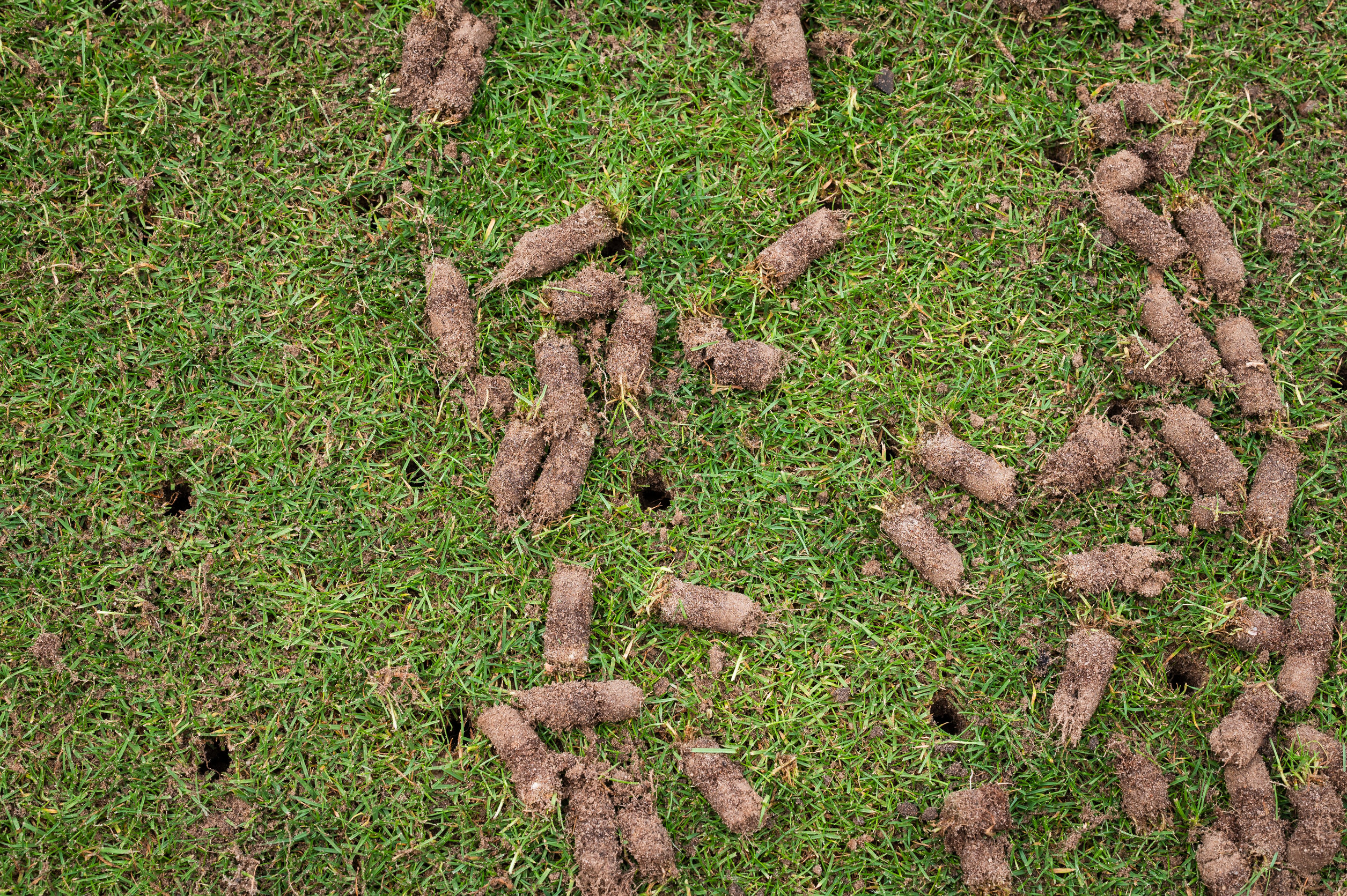
A core aerator travels across the grass and pulls narrow soil cores from the ground. These temporary openings relieve compaction and improve the movement of water and air through the root zone.
Healthy soil contains small spaces that allow roots to access air and moisture. When soil becomes compacted, those spaces shrink.
Compaction can result from:
Over time, compacted soil can make it difficult for grass roots to develop properly.
Your lawn may benefit from core aeration if you notice:
Aeration does not automatically fix every lawn problem, but it can create better growing conditions when compaction is part of the issue.
Overseeding means spreading grass seed over an existing lawn to increase turf density.
Instead of completely removing the existing lawn and starting over, overseeding introduces new grass plants into areas where turf has become thin.
Lawn overseeding in Minnesota can be particularly helpful after a difficult summer.
Heat, drought, pets, heavy use, winter damage, pests, and other stresses can gradually reduce lawn density. Once the turf becomes thin, weeds have more room to establish and bare soil becomes more noticeable.
Overseeding helps fill those gaps with new grass.
Consider overseeding if your lawn has:
The goal is not simply to scatter seed everywhere. Effective overseeding depends on soil contact, proper seed selection, moisture, and timing.
The easiest way to understand the difference is to think about where each service works.
Aeration improves the soil environment.
Overseeding improves turf density.
If your soil is hard and compacted but your grass coverage is relatively good, aeration may be the primary need.
If your soil conditions are healthy but the lawn has become thin, overseeding may be more appropriate.
If the lawn is both compacted and thin, combining aeration and overseeding may provide the most complete approach.
Combining aeration and overseeding can make sense because one service creates favorable conditions for the other.
Grass seed performs best when it makes good contact with the soil.
When seed is spread over an existing lawn, some may become trapped in dense turf, thatch, or surface debris instead of reaching the ground.
Core aeration creates thousands of openings across the lawn. These holes expose soil and provide additional places where grass seed can settle.
For a lawn dealing with both compaction and thinning, the combination can address two problems at once:
This doesn’t mean every aerated lawn automatically needs seed or every over-seeded lawn must first be aerated. The condition of the property should guide the decision.
Timing is especially important for fall lawn seeding in Minnesota.
University of Minnesota Extension identifies early August through late September as the preferred seeding period and mid-August through mid-October as the best aeration window.
That overlap makes late summer and early fall ideal for homeowners who need both treatments.
Minnesota lawns commonly contain cool-season turf grasses. These grasses become more active again as the hottest summer temperatures fade.
The soil remains warm enough to support seed germination while cooler air temperatures reduce stress on new seedlings and existing grass.
That combination is difficult to replicate during midsummer.
Trying to establish grass during the hottest part of summer can be challenging.
New grass seedlings have small root systems and require consistent moisture. Hot weather can cause the soil surface to dry rapidly, increasing irrigation needs and stress.
Early fall typically offers more favorable conditions.
Benefits include:
This is why fall lawn care in Brainerd often includes an evaluation of thin or compacted turf.
Aeration may be enough when turf density is already relatively strong but soil conditions have deteriorated.
For example, a frequently used backyard may remain green while feeling hard underfoot. Water may begin running off certain areas, and grass roots may have trouble penetrating the compacted soil.
In that situation, core aeration can improve the growing environment without necessarily requiring additional grass seed.
Aeration alone may make sense when:
The goal is to correct the soil problem rather than introduce unnecessary seed.
Overseeding may be appropriate when the lawn is thin but the soil is not significantly compacted.
Perhaps summer drought caused patches of grass to die back, or an older lawn has gradually lost density.
If water still infiltrates properly and soil conditions appear healthy, overseeding may be sufficient.
Overseeding alone may be appropriate if:
Proper preparation still matters.
Grass seed needs access to soil, so lightly preparing thin or bare areas may improve germination.
Many Minnesota lawns show signs of both soil compaction and thinning.
This is particularly common on heavily used residential properties, cabin lawns, and yards that receive significant summer activity.
You may want to aerate and overseed your lawn when:
In these situations, the services complement one another particularly well.
Compaction can make it difficult to improve a thin lawn, even when additional seed is applied.
If grass roots cannot expand into the soil efficiently, new seedlings may struggle along with the existing turf.
Aeration helps create a more favorable root environment by reducing compaction and increasing access to air and water.
That is why evaluating soil conditions is so important before assuming every thin lawn simply needs more seed.
Sometimes the problem isn’t a lack of grass seed. It is the condition of the ground beneath the grass.
Successful lawn repair in Minnesota also depends on choosing grass species suited to the property.
Minnesota lawns may contain cool-season grasses such as:
Different grasses perform better under different conditions.
A sunny, heavily used lawn may have different needs than a shaded property surrounded by mature trees.
Consider:
Selecting seed based on site conditions gives new turf a better opportunity to become established.
The work does not end once the seed is spread.
New grass needs consistent moisture during germination. The soil surface should remain appropriately moist without becoming saturated or washing seed away.
After aeration and overseeding:
The exact germination time varies by grass species and weather conditions.
Even well-timed aeration and overseeding can produce disappointing results if basic mistakes interfere with establishment.
Minnesota’s fall weather can change quickly. Young grass needs time to establish before winter.
Newly germinating seed depends on consistent moisture.
Seed that does not match the property’s sunlight, soil, and usage may struggle regardless of timing.
If poor drainage, shade, pet damage, or another issue caused the lawn to thin, simply adding seed may not solve the underlying problem.
Core aerators work best when the soil is moist enough for proper penetration without being muddy.
The Brainerd Lakes Area has a relatively short window between summer stress and winter dormancy.
That makes September an important time for evaluating lawn health.
A well-rounded fall lawn-care plan may include:
Not every lawn needs every service.
The most effective approach is to identify the problems present and choose treatments that address those specific conditions.
RJ3 Property Maintenance lists aeration and seeding among its property-maintenance services and also provides regular lawn care, trimming, edging, garden care, seasonal cleanup, and other property services throughout the Brainerd Lakes Area.
If your lawn is compacted but dense, aeration may be the priority.
If it is thin but the soil remains healthy, overseeding may be enough.
If it is both compacted and thin, combining aeration and overseeding often makes the most sense.
The key is to diagnose the lawn before treating it.
Look at turf density, soil hardness, water infiltration, traffic patterns, bare areas, and summer damage. Those clues provide a much better answer than automatically scheduling the same treatment every fall.
Aeration and overseeding are often mentioned together, but they solve different lawn problems.
Aeration focuses on improving compacted soil and the growing environment around grass roots. Overseeding focuses on adding new grass to thin or damaged turf.
For many Minnesota lawns, fall creates an ideal opportunity to use one or both practices because cooler temperatures and warm soil support active cool-season grass growth.
Homeowners throughout the Brainerd Lakes Area can use early fall to evaluate how their lawns handled summer and determine what needs attention before winter.
Whether your property needs core aeration, fall lawn seeding, or a combination of the two, matching the treatment to the actual condition of the lawn is the best place to start.
For information about aeration and seeding, lawn care, seasonal cleanup, or other property-maintenance services in the Brainerd Lakes Area:
RJ3 Property Maintenance
11189 Sleepy Hollow Drive
Brainerd, MN 56401
Phone: (218) 576-4992
Email: info@rj3pm.com