
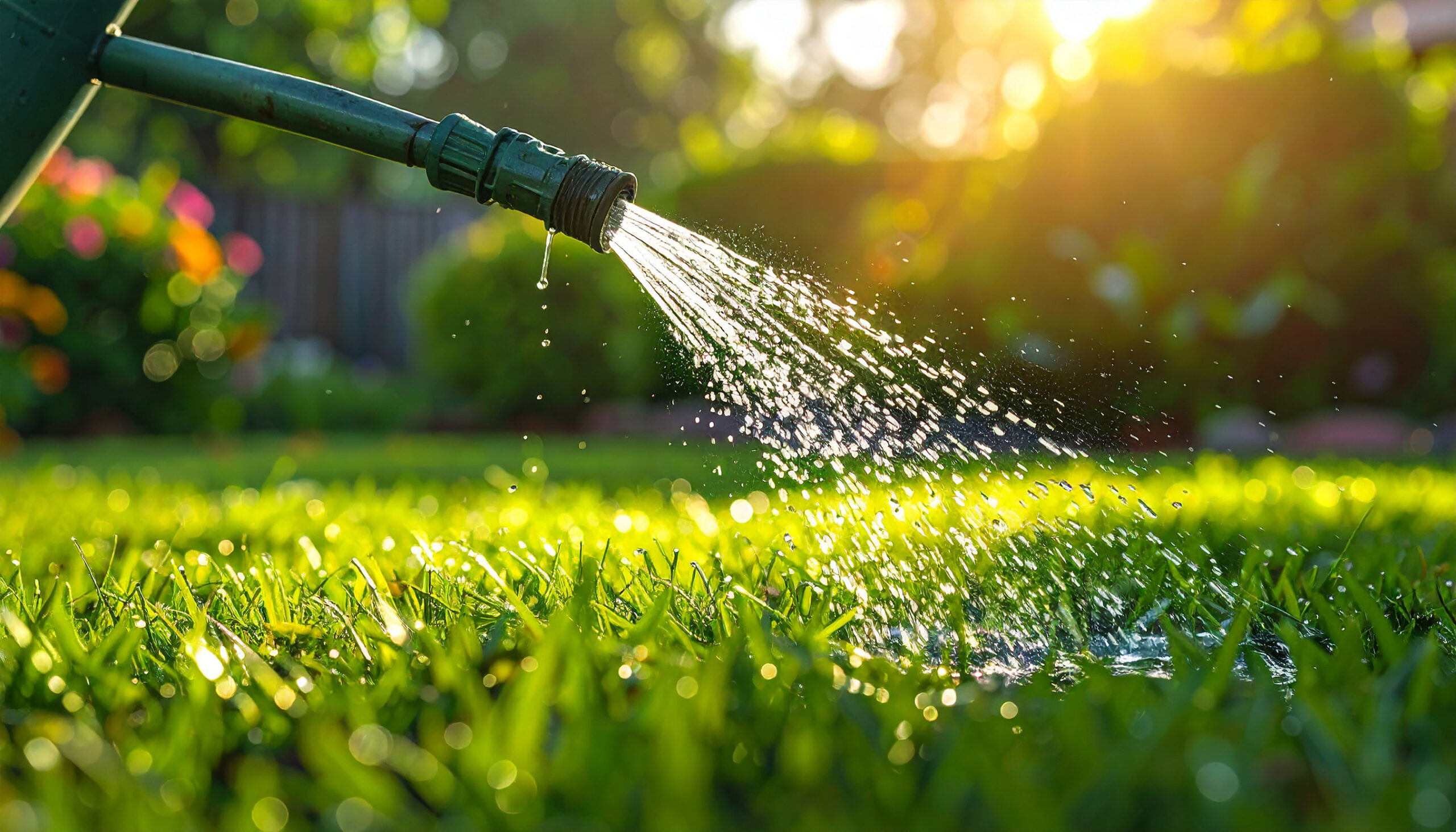
Water is one of the most powerful tools in lawn care — and one of the easiest to misuse. As temperatures rise and rainfall becomes less predictable, Minnesota lawns rely increasingly on intentional watering practices to maintain health, color, and resilience.
This period of the growing season is not about pushing growth aggressively. Instead, it is about supporting root strength, preserving soil moisture, and helping turf adapt to sustained warmth. Lawns that receive thoughtful, well-timed watering now are far better equipped to handle heat, traffic, and natural stress later in the summer.
Cool-season grasses common in Minnesota — such as Kentucky bluegrass and fescues — naturally slow top growth as temperatures increase. While growth above ground becomes less obvious, root systems remain active and responsive to moisture availability.
Proper watering during this phase helps:
Poor watering habits, by contrast, often lead to shallow roots, uneven growth, and increased vulnerability to stress.
Not all lawns require the same amount of water. Factors that influence moisture needs include:
Understanding your soil helps determine both watering frequency and duration.
Lawns in full sun lose moisture faster than shaded areas. Sloped lawns may shed water before it can soak in, while low areas may retain excess moisture.
Tailoring watering practices to these conditions improves efficiency and prevents waste.
A general guideline for Minnesota lawns is approximately one inch of water per week, including rainfall. However, this amount should be applied gradually and adjusted based on conditions.
Rather than watering lightly every day, lawns benefit more from deep, infrequent watering. This approach allows moisture to penetrate deeper into the soil, encouraging roots to grow downward instead of remaining near the surface.
The timing of irrigation has a direct impact on water efficiency and turf health.
Watering early in the day:
Evening watering may leave grass wet overnight, which can contribute to fungal issues, while midday watering often results in unnecessary water loss.
Recognizing early warning signs helps prevent long-term damage.
Balancing moisture is key — more water is not always better.
Deep roots are the foundation of a resilient lawn. Watering practices that promote root depth help lawns withstand heat and dry periods with less stress.
Strategies include:
Lawns trained to seek moisture deeper in the soil perform better throughout the summer.
Both automated irrigation systems and manual watering methods can be effective when used correctly.
Well-calibrated systems help ensure even coverage and consistent timing. However, systems should be adjusted seasonally to reflect weather conditions and prevent overwatering.
For smaller lawns or specific problem areas, manual watering allows for precision and flexibility. Monitoring soil moisture ensures water is applied where it is actually needed.
Efficient watering supports both lawn quality and environmental responsibility.
Best practices include:
Smart water use reduces runoff, protects soil structure, and supports long-term turf health.
For additional guidance on water-efficient lawn practices, Minnesota homeowners can reference University of Minnesota Extension resources.
Cabins and seasonal properties often face unique challenges due to irregular occupancy. Establishing a consistent watering plan helps prevent turf stress during periods of limited supervision.
Considerations include:
Stable moisture management helps maintain lawn quality throughout the season.
Watering does not operate in isolation. It directly affects:
When combined with proper mowing and balanced fertilization, effective watering supports a lawn that remains strong and visually consistent.
Professional lawn care providers help property owners evaluate moisture needs, identify problem areas, and adjust watering strategies based on real conditions rather than assumptions.
Services may include:
This support helps ensure water is used effectively while maintaining turf quality.
If you have questions about lawn watering, property maintenance, or maintaining healthy turf for your Minnesota home or cabin, please contact:
RJ3 Property Maintenance
11189 Sleepy Hollow Drive
Brainerd, MN 56401
Email: info@rj3pm.com
Phone: 218-576-4992