
Mid-summer weather in Minnesota often brings rapid changes. Calm, warm days can shift quickly into thunderstorms with high winds, intense rainfall, and falling debris. While storms are unavoidable, the degree of damage they cause is often influenced by the condition of the property beforehand.
Thoughtful lawn care, landscaping maintenance, and property monitoring help reduce storm impact while supporting faster recovery afterward. Understanding how outdoor spaces respond to wind and water allows homeowners to make informed decisions that protect both appearance and function throughout the season.
Storm-related damage doesn’t always involve dramatic fallen trees or flooded yards. More often, it shows up as:
When these issues go unaddressed, they can affect lawn health, increase repair needs, and reduce property usability over time.
Prepared properties typically experience:
Strong winds affect more than trees and shrubs. Turfgrass can also experience stress during severe weather.
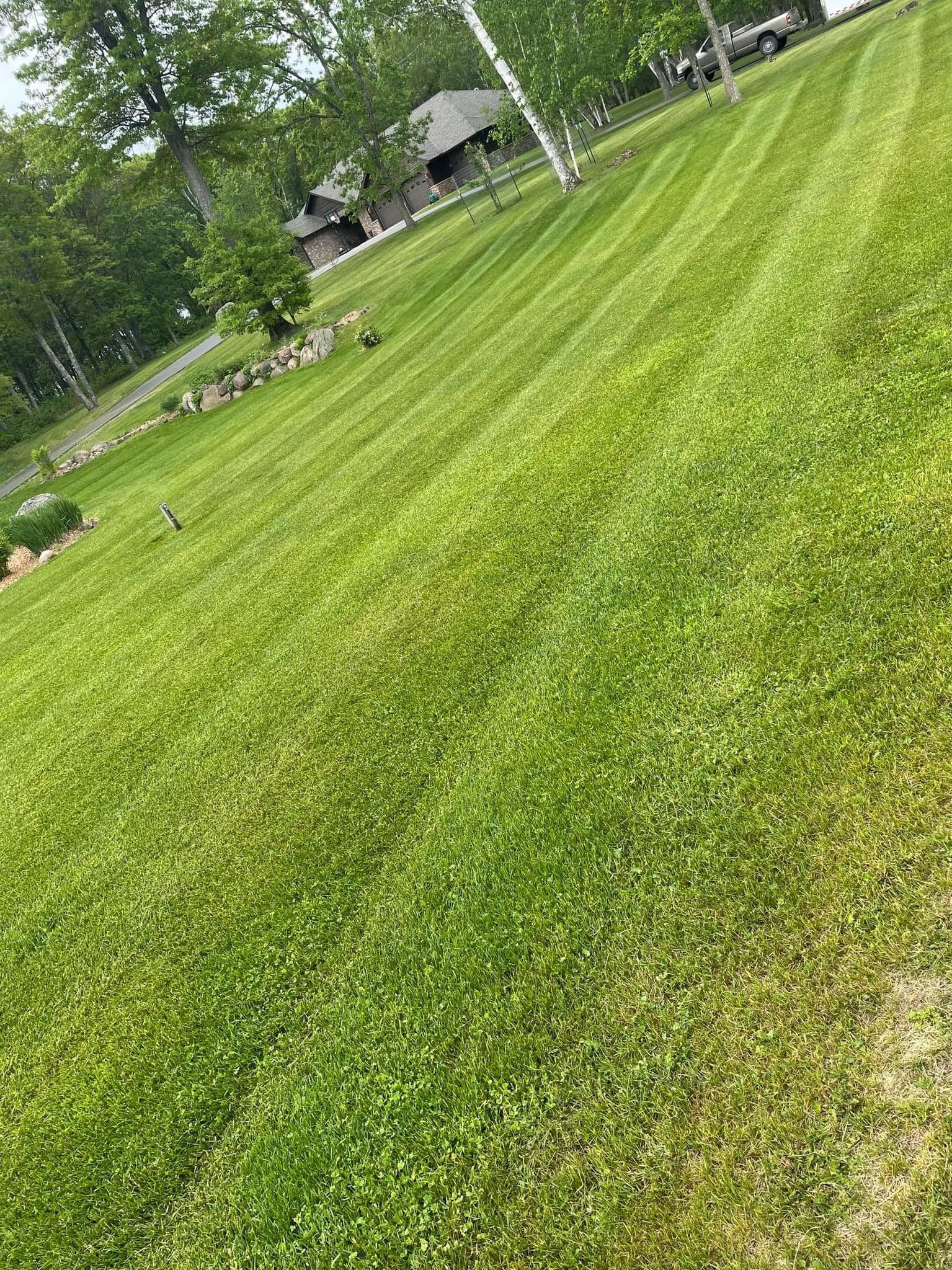
Lawns with dense growth and strong root systems tend to recover more quickly after storms.
Trees and shrubs contribute significantly to curb appeal, but unmanaged growth can increase storm risk.
Overgrown or unbalanced canopies are more vulnerable to breakage. Strategic trimming improves:
Dead, damaged, or crossing branches are often the first to fail during storms. Removing these proactively reduces risk without altering plant health.
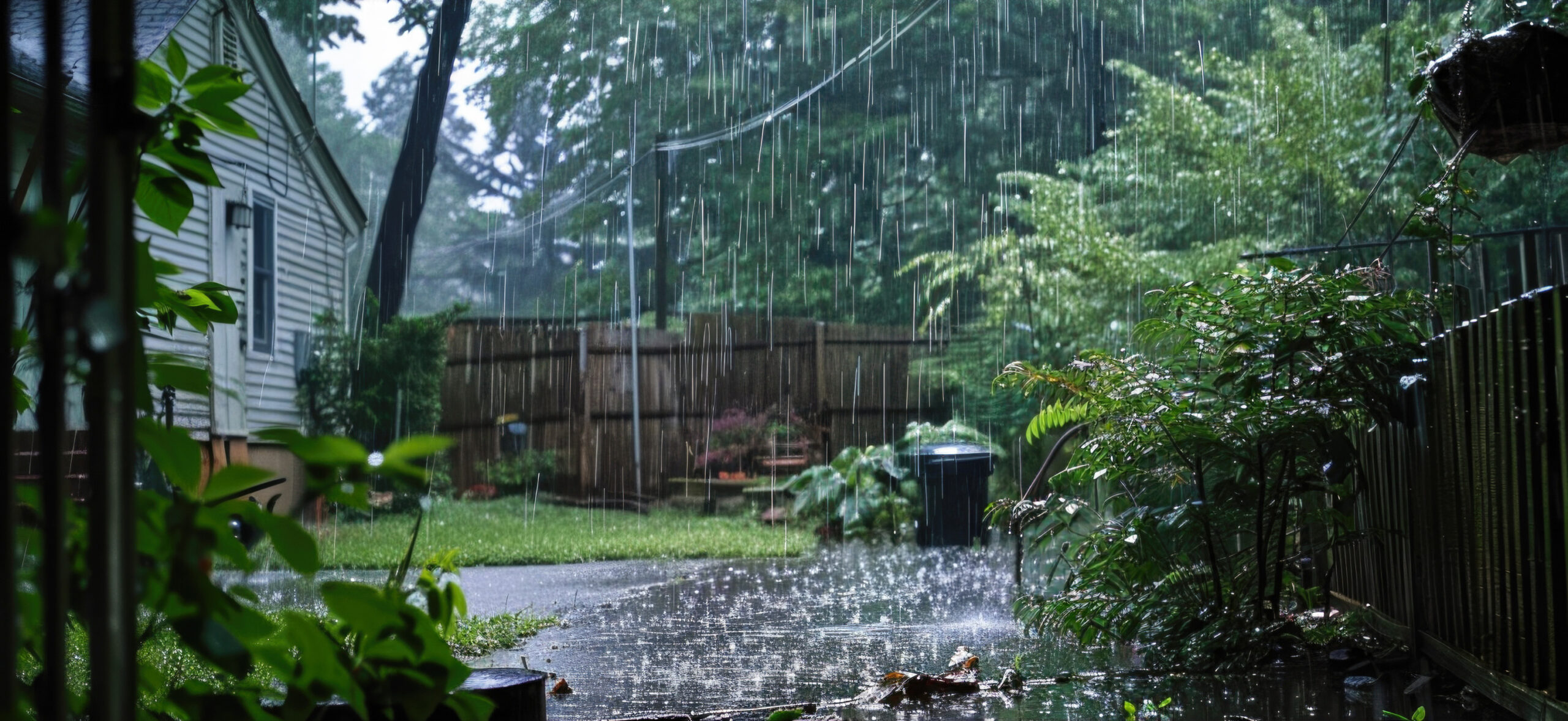
Heavy summer rainfall can overwhelm areas with poor drainage.
Stormwater that cannot move away from the property efficiently increases stress on turf and plants while raising the risk of soil displacement.
Landscape beds often absorb the brunt of heavy rain.
Best practices that reduce erosion include:
Mulch helps slow water movement, reducing soil loss and protecting plant roots during intense rainfall.
Storm recovery begins once debris is cleared and conditions stabilize.
Branches, leaves, and other debris should be removed promptly to:
Flattened grass often recovers naturally once upright. Areas that remain matted or thin may benefit from light raking or overseeding later in the season.
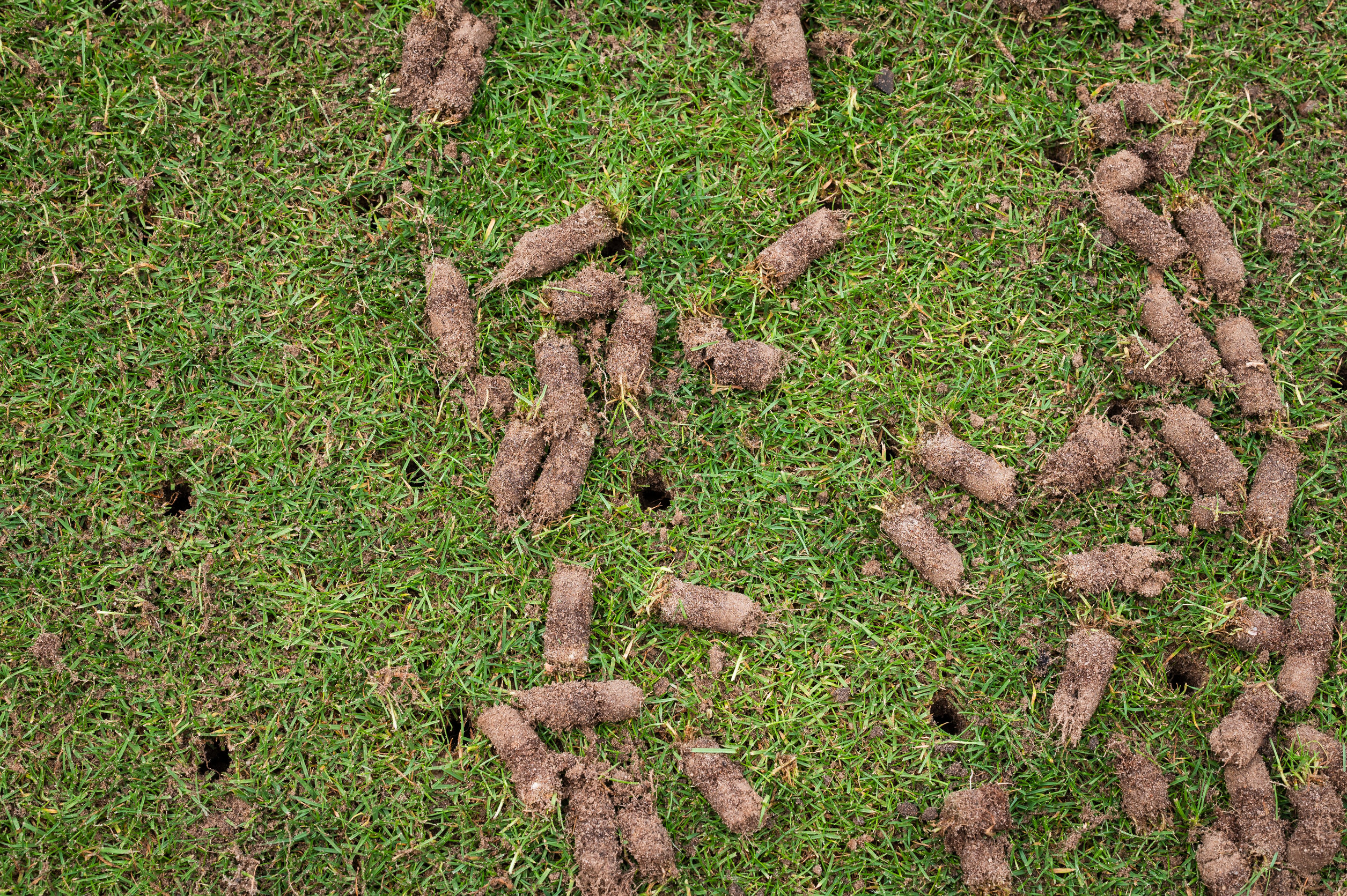
Rain combined with foot traffic or equipment use can compact soil quickly.
Compaction restricts:
Allowing lawns time to dry before mowing or walking helps preserve soil structure and supports recovery.
Stormwater and debris affect more than plant material.
Key areas to monitor include:
Clearing sediment and debris helps maintain safety and prolongs the life of hardscape features.
Cabins often sit unattended between visits, increasing the risk of unnoticed storm damage.
Important considerations include:
Routine property checks help prevent minor storm effects from becoming larger maintenance issues.
Properties maintained with storm resilience in mind often experience:
Storm readiness supports both aesthetics and durability.
Professional property maintenance teams help identify vulnerabilities before storms occur and assess recovery needs afterward.
Support may include:
This proactive approach reduces stress on property owners and improves long-term results.
If you have questions about storm preparedness, lawn recovery, or maintaining your Minnesota property through unpredictable summer weather, please contact:
RJ3 Property Maintenance
11189 Sleepy Hollow Drive
Brainerd, MN 56401
Email: info@rj3pm.com
Phone: 218-576-4992