
Minnesota lawns face many challenges.
Additionally, after frozen ground and snow melt, aeration helps grass move into spring growth.
However, this is soon followed by summer heat, drought, mowing, foot traffic, pets, and outdoor activity.
By late summer, your lawn may still look reasonably green while struggling with a problem you cannot easily see: compacted soil.
Compaction limits the spaces within the soil where air, water, and nutrients can move. However, it can also make it harder for grass roots to grow deeply and efficiently. That’s where lawn aeration in Minnesota can make an important difference.
Additionally, aeration can sometimes be performed at other times of the year, but early fall suits Minnesota’s cool-season lawns best.
Moderate temperatures, warm soil, and renewed turf growth create favorable conditions for recovery.
Additionally, homeowners in Brainerd, Baxter, Nisswa, Crosslake, and the surrounding Brainerd Lakes Area, understand when and why aeration is needed.
This knowledge can guide your seasonal lawn-care decisions.
Core aeration is a lawn-care process that removes small plugs of soil and grass from the lawn.
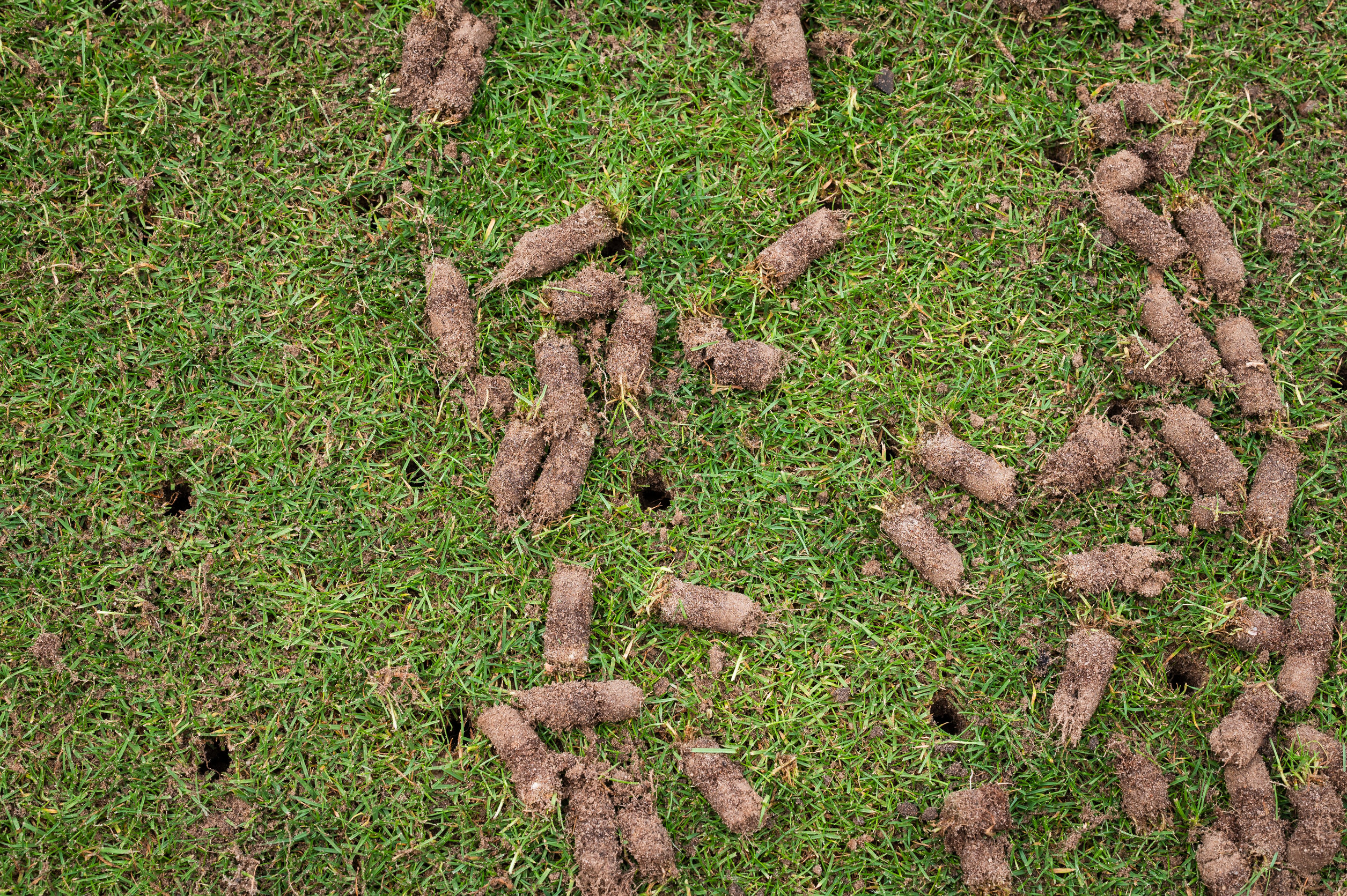
A core aerator travels across the turf and pulls narrow plugs from the ground, creating temporary openings throughout the root zone. These openings help relieve soil compaction and improve the movement of water and air into the soil.
After aeration, small soil cores remain scattered across the lawn. Although they may look a little messy initially, they are normally left in place to break down naturally through rain, mowing, and everyday lawn activity.
Core aeration differs from spike aeration. Spike-style equipment pushes holes into the ground but does not remove soil. True core aeration physically creates additional space by removing plugs, making it especially useful for compacted lawns.
Healthy grass depends heavily on what happens beneath the surface.
Soil contains small spaces, or pores, that hold water and air. Grass roots depend on those spaces for normal growth.
When soil becomes compacted, its particles are pressed more tightly together. That reduces pore space and can make it more difficult for roots to access the conditions they need.
Compacted soil may contribute to:
Soil compaction can develop slowly through everyday property use. Regular foot traffic, pets, children’s play areas, lawn equipment, outdoor entertaining, and repeated travel along the same paths can all contribute.
Minnesota weather can add another layer of stress, particularly when lawns are heavily used while the soil is wet.
If you are wondering when to aerate a lawn in Minnesota, late summer through early fall should generally be your first consideration.
University of Minnesota Extension identifies mid-August through mid-October as the preferred window for lawn aeration in Minnesota.
Why does this time work so well?
Most Minnesota lawns contain cool-season grasses. These turfgrasses perform particularly well during cooler periods of spring and fall.
By late August and September, the intense heat of midsummer typically begins to ease while the soil remains warm. Grass resumes more active growth, creating favorable conditions for recovery after aeration.
That makes early fall an ideal time to address summer soil compaction without exposing freshly aerated turf to the harshest heat of the growing season.
Mid-summer can be difficult for Minnesota lawns.
Heat, limited rainfall, and repeated use may cause cool-season turf to slow its growth. Performing aggressive lawn maintenance during severe heat can create unnecessary additional stress.
By early fall, cooler daytime and nighttime temperatures generally create a better growing environment.
Grass can devote more energy to recovery rather than simply surviving summer heat.
Although the air becomes cooler in early fall, the ground retains warmth accumulated throughout summer.
Warm soil combined with moderate air temperatures supports active turf growth and makes fall an especially useful period for lawn maintenance.
Aeration temporarily disrupts the surface of the lawn.
Performing the work while grass is actively growing gives the turf time to recover before winter dormancy.
Waiting too late can shorten that recovery period, while aerating during extreme summer stress may slow recovery.
The biggest reason fall lawn aeration works is simple: it aligns lawn maintenance with the natural growth pattern of cool-season grass.
Working with the turf’s growth cycle generally produces better results than forcing major maintenance during stressful conditions.
Not every lawn automatically needs aeration every year. Looking at actual lawn conditions can help determine whether it makes sense for your property.
If water frequently runs across the lawn rather than soaking into the soil, compaction may be contributing.
Slope, soil type, heavy rainfall, and thatch can also affect runoff, so this sign should be considered along with other symptoms.
Grass around play areas, common walking routes, patios, gates, and other frequently traveled spaces often becomes thinner than the surrounding turf.
Repeated traffic can compress the soil beneath these areas.
Try pushing a screwdriver into moist soil in several parts of your lawn.
If it is unusually difficult to penetrate, the soil may be heavily compacted.
If mowing and watering practices seem appropriate but your lawn remains thin or weak, soil conditions are worth investigating.
Compaction isn’t always the cause, but it can be an overlooked factor.
Lawn conditions throughout the Brainerd Lakes Area can vary significantly from property to property.
A traditional residential lawn in Brainerd may experience different conditions than a heavily used cabin property near Nisswa or Crosslake.
Many Brainerd Lakes properties also experience substantial summer traffic. Families, guests, pets, lawn equipment, and recreational activities can all place additional pressure on turf and soil.
Properties may also differ in:
For homeowners researching aeration in Brainerd, MN, local conditions should therefore be considered alongside the calendar.
The best lawn-care plan responds to what is actually happening in the yard rather than following the same routine for every property.
Early fall is also a valuable time for overseeding many Minnesota lawns.
That creates an opportunity to combine aeration with another useful lawn-care practice.
Grass seed needs good contact with the soil to germinate successfully. When seed is simply spread over dense existing turf, some may remain caught above the soil surface.
Core aeration creates openings throughout the lawn and exposes additional soil.
For thin lawns, following aeration with appropriate overseeding can help address both soil compaction and turf density at the same time.
This is one reason lawn aeration in the Brainerd Lakes is often considered alongside fall seeding and other seasonal lawn improvements.
Aeration and dethatching are frequently confused.
While both can benefit certain lawns, they address different problems.
Core aeration primarily targets soil compaction by removing plugs from the ground.
Dethatching removes excessive organic material that develops between the green grass and the soil surface.
A lawn can have compacted soil without excessive thatch, and it can have a thatch problem without severe compaction.
Determining which issue is present helps prevent unnecessary lawn work.
Aeration can also indirectly support thatch management by bringing soil and microorganisms into greater contact with organic material, which may encourage natural decomposition.
Spring is considered an acceptable secondary period for aeration in Minnesota, but routine early-spring aeration is generally less desirable than fall aeration.
Minnesota lawns are recovering from winter during spring, and soils may remain wet for an extended period.
Working on overly wet soil can actually contribute to additional compaction.
Spring aeration can also disturb turf at a time when weeds are beginning active growth.
For most homeowners who can choose their timing, late summer or early fall provides a better opportunity.
Severe compaction may justify different timing, but routine lawn improvement projects are generally better saved for the fall growing period.
Proper conditions help a core aerator work effectively.
Extremely dry, hard soil can make it difficult for the equipment to penetrate deeply enough to remove useful cores. On the other hand, saturated or muddy ground is not ideal either.
The goal is soil that is moist but not waterlogged.
Before aeration:
Knowing where irrigation components, invisible fencing, or other shallow utilities are located can also help prevent accidental damage.
Immediately after core aeration, your lawn may not look perfectly manicured.
Small holes and soil plugs will be visible throughout the turf.
That is temporary.
Leave the cores in place. They gradually break apart and return soil to the lawn.
Following aeration, continue appropriate lawn maintenance. If overseeding is part of the plan, consistent moisture becomes especially important while seed germinates.
Avoid unnecessary heavy traffic immediately after aeration so the turf has time to recover.
There is no rule that every Minnesota lawn must be aerated annually.
A heavily used lawn with compacted soil may benefit from more frequent aeration, while a lightly used property with healthy soil structure may require it less often.
Consider factors such as:
Treating the lawn according to actual conditions helps avoid unnecessary maintenance while addressing problems when they occur.
Aeration is most effective when it is part of good overall lawn management.
Fall lawn care in Minnesota may also include mowing, watering, overseeding, weed management, appropriate fertilization, seasonal cleanup, and preparing the property for winter.
A healthy lawn depends on all of these factors working together.
Aeration won’t compensate for consistently incorrect mowing, severe drainage problems, inappropriate grass varieties, or chronic overwatering.
Instead, think of core aeration as one tool for creating better growing conditions beneath the turf.
RJ3 Property Maintenance provides lawn care and property-maintenance services throughout the Brainerd Lakes Area, including regular mowing, trimming, edging, debris cleanup, aeration, seeding, garden care, landscaping tasks, and seasonal cleanup.
Minnesota’s relatively short growing season means timing matters.
Early fall provides a useful window between summer stress and winter dormancy.
During this period, cool-season grasses become more active, soil remains warm, and temperatures are generally more comfortable for turf growth.
That combination makes early fall one of the most productive times to address compaction.
For homeowners considering lawn aeration in Minnesota, performing the work during this natural recovery period can help improve soil conditions and prepare the lawn for continued growth before winter.
If you’re wondering when to aerate a lawn in Minnesota, early fall is one of the best answers.
University of Minnesota Extension identifies mid-August through mid-October as the preferred Minnesota aeration period, giving homeowners a useful seasonal window to address compacted soil while cool-season grass is actively growing.
For Brainerd Lakes Area lawns, fall aeration can be particularly valuable after a busy summer filled with foot traffic, outdoor activities, pets, lawn equipment, heat, and changing moisture conditions.
The key is to evaluate your lawn rather than aerating simply because the calendar says September.
If soil is compacted, water struggles to penetrate, or heavily trafficked areas are beginning to thin, core aeration may be a useful addition to your fall lawn-care routine.
Combined with proper mowing, watering, overseeding when needed, and consistent seasonal maintenance, fall aeration can help create better growing conditions for a healthier Minnesota lawn.
For information about lawn care, aeration, seeding, seasonal cleanup, or property maintenance in the Brainerd Lakes Area:
RJ3 Property Maintenance
11189 Sleepy Hollow Drive
Brainerd, MN 56401
Phone: (218) 576-4992
Email: info@rj3pm.com